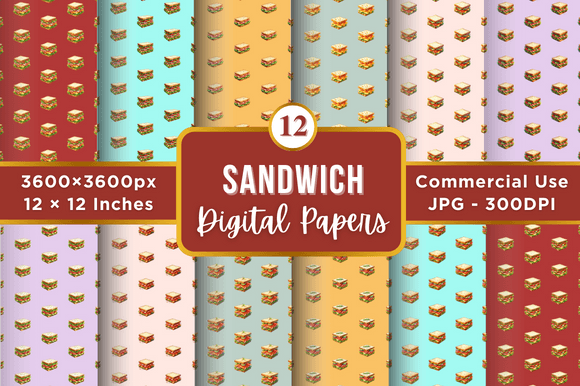
Sandwich Digital Paper Patterns
In the modern landscape of digital creation, where speed and quality often exist in tension, finding assets that bridge the gap between aesthetic appeal and functional utility is a constant pursuit. Sandwich Digital Paper Patterns represents a specific solution for creators who need high-resolution textures without the overhead of complex file management or licensing ambiguities. This collection is not merely a set of images; it is a foundational resource designed to streamline the production pipeline for everything from commercial product design to personal organizational systems.
The core value proposition lies in the technical specifications and the breadth of application. The collection comprises 12 individual JPG files, each meticulously crafted at 3600 x 3600 pixels with a 300 DPI resolution. In practical terms, this means the asset is ready for immediate deployment in high-stakes environments. Whether you are preparing a print run for a boutique greeting card line or generating large-format wall art for a home office renovation, the resolution ensures crisp output without pixelation. The inclusion of seamless patterns further elevates the utility, allowing designers to extend textures infinitely across a canvas, which is critical for background design, fabric printing, and wrapping projects.
Integrating Digital Assets into Creative Workflows
For professionals and hobbyists alike, the integration of digital paper patterns into a workflow begins long before the actual design work starts. It requires a strategic approach to asset acquisition and organization. When evaluating Sandwich Digital Paper Patterns, the first step is understanding how these files fit into your existing digital ecosystem. Since the files are provided as high-quality JPGs, they are universally compatible with almost any image editing software, from Adobe Photoshop and Illustrator to free alternatives like GIMP or Canva. This compatibility removes friction, allowing you to bypass conversion steps and move directly into the creative phase.
The process of implementation varies depending on the end goal. For a marketer creating promotional materials, these patterns might serve as textured backgrounds for social media graphics or email headers. In this scenario, the workflow involves importing the JPG, adjusting opacity to blend with typography, and ensuring the color profile matches the final output device. For a scrapbooker or planner enthusiast, the process shifts towards physical production. Here, the 300 DPI standard is non-negotiable. You must ensure your printer driver settings match the file resolution to maintain the integrity of the "no watermark" promise found in the final download. Skipping this verification step can lead to soft prints that undermine the professional look of the final product.
Applications Across Diverse Sectors
The versatility of this paper collection allows it to function effectively across multiple stages of a project lifecycle. During the planning phase, creators can use these patterns to create mood boards or prototypes. Visualizing a concept with a high-fidelity texture helps stakeholders understand the potential outcome better than abstract sketches. For instance, when pitching a new stationery line, showing a mockup of a notebook cover using the seamless pattern provides immediate clarity on the brand's aesthetic direction.
During the execution phase, the utility becomes even more pronounced. Consider the task of creating personalized invitations. The ability to layer text over a high-resolution, seamless pattern creates depth and visual interest that flat colors cannot achieve. Similarly, for those involved in crafting stickers or tumbler wraps, the dimensions of the source file (3600 x 3600 pixels) provide ample room for cropping and scaling. You can extract specific sections of the pattern to create repeating motifs without losing quality, a common requirement in die-cut sticker production.
In the post-production or distribution stage, the commercial use license included with Sandwich Digital Paper Patterns becomes a critical asset. Many creators hesitate to use digital assets because of restrictive licensing terms that limit their ability to sell products made with those assets. By securing a collection that explicitly permits commercial use, entrepreneurs can confidently move from prototyping to selling. This eliminates the legal risk associated with unlicensed stock imagery and simplifies the accounting process, as there are no per-unit royalties or additional clearance fees required for printed goods.
Optimizing Quality Control and Efficiency
Efficiency in digital creation is often about reducing the number of decisions and actions required to reach a finished state. A well-organized library of digital papers acts as a force multiplier. Instead of spending hours searching for a suitable texture or waiting for a custom illustration, a creator can immediately access one of the 12 available options. This reduction in search time translates directly to increased billable hours for freelancers or more time spent on family activities for hobbyists.
Quality control is another vital component of this workflow. The absence of watermarks in the final download is a significant indicator of professionalism. Watermarks often indicate a lack of preparation or a trial version of an asset, forcing the user to find a workaround or purchase a separate license. With a clean, watermark-free file, the focus remains entirely on the creative output. Furthermore, the consistency of the 300 DPI resolution across all 12 files ensures uniformity in your project portfolio. If you are producing a series of planners or a set of gift wrap designs, maintaining consistent image quality prevents jarring transitions between different elements of the same brand identity.
When organizing these assets for long-term use, consider creating a dedicated folder structure within your project management system. Tagging the files by theme, color palette, or intended use case (e.g., "Birthday," "Wall Art," "Stationery") allows for rapid retrieval. This organizational discipline is particularly important for small business owners managing multiple client projects simultaneously. Having a standardized library of high-quality patterns ensures that every client receives a product that meets the same high standards, regardless of the specific designer working on the file.
Collaborative and Cross-Platform Use
The nature of modern work often involves collaboration and cross-platform usage. Because the files are standard JPGs, they can be easily shared with team members, clients, or manufacturers. For example, if you are outsourcing the printing of your custom tumbler wraps, you can send the exact same 3600 x 3600 pixel file to the manufacturer, confident that they will receive the correct resolution and format. This reduces the back-and-forth communication typically associated with file specification errors.
Additionally, these patterns can be integrated into broader marketing strategies. A blogger might use the textures to create featured images for blog posts, while an educator could incorporate them into printable worksheets or classroom decorations. The "irresistible" nature of the collection lies in its adaptability; it does not dictate a single style but rather supports a wide range of artistic directions. This flexibility makes it a valuable investment for anyone looking to diversify their content output without expanding their budget significantly.
Ultimately, the decision to utilize Sandwich Digital Paper Patterns is a strategic choice to enhance productivity and output quality. By providing a reliable, high-resolution, and legally clear resource, it allows creators to focus on what matters most: the execution of their vision. Whether you are launching a new product line, updating your personal planner, or simply enjoying a creative afternoon, having these tools readily available removes barriers to entry and empowers you to produce work that looks polished and professional. The seamless integration of these patterns into your routine transforms a simple digital download into a cornerstone of your creative infrastructure.
If you encounter any questions regarding the integration of these files into your specific workflow or have inquiries about the licensing terms, reaching out to the creator is encouraged. Open communication ensures that you can maximize the potential of the asset, whether you are a seasoned professional or just starting your journey in digital crafting. Happy creating.